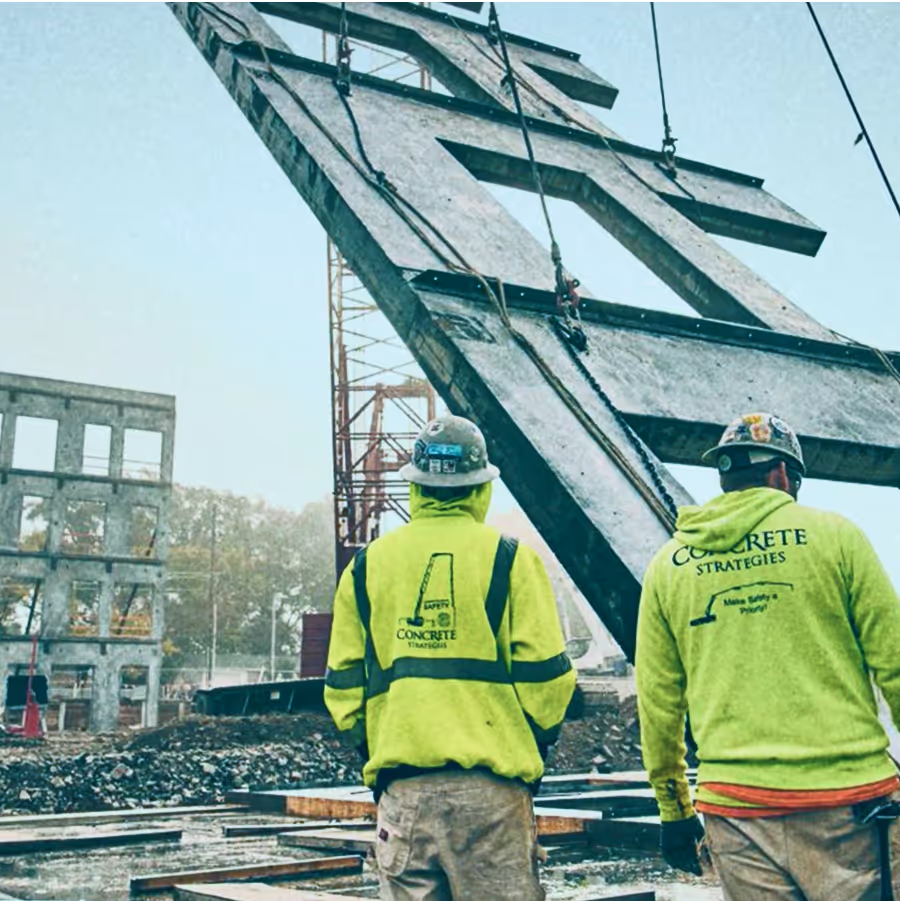
I've spent most of my life building companies, communities, relationships, and opportunities. And while I'm still very involved in the work at Clayco, I've come to realize that the legacy I want to leave goes far beyond what we construct with steel and glass. This next chapter — Bob Clark Beyond — is about building lives, not just buildings.
I call myself an Adventurer in Hope. That's not a brand tagline. It's a description of how I try to move through the world.
Adventure, the way I use the word, is a disposition more than an activity. It's the willingness to start things before you know how they'll end. To commit before the full picture is clear. To be genuinely curious about what's around the next corner.
I dropped out of college after five weeks and started businesses I didn't know how to run. I started Clayco with two people and no guarantee it would amount to anything. I went to Nepal alone during one of the hardest periods of my life. I said yes to an invitation to climb Mount Whitney as I approached my 40th birthday — a 20-hour round trip that changed how I understood what I was capable of. Every one of those was an adventure — not because of the risk, but because of the openness required.
Hope, as I understand it, is different from optimism. Optimism is a prediction. Hope is a commitment. Always believe in the possibility of the world around you. Inspiration shows up when you least expect it.
Back in 2008, I was able to host an event at Warren Buffett's home in Omaha. I arrived early, expecting to be met by security or staff, and rang the doorbell. Warren answered the door, greeted me as an old friend would, and gave me a brief tour of the house before he went to get dressed. I was star-struck. What I've always admired about him is what he called 'going quiet' — the desire to focus on what really matters, to let the work and the impact speak louder than the noise. True leadership often whispers. To steal a quote from one of my heroes: 'The best thing I did was to choose the right heroes.'
In junior high school, Bob's principal made a push for students to identify and develop their own set of values. That assignment shaped Bob for life. His values include: valuing yourself first — taking care of your health, energy, and peace so you can be there for others. Valuing competition — when it's fair, you can usually win by working harder. And above all: 'Choice' is the most important word. We have the choice to do our best job while avoiding being our worst selves. We get to choose who we surround ourselves with. We get to choose how to spend our time.
He has also written about what endures: standing in Siena's Piazza del Campo, a civic space that has worked for over 700 years, or beside the stones of Osaka Castle placed in the 1580s. "One block, perfectly aligned. Thousands more just like it. And not one name recorded. That's real legacy. When the work speaks louder than the person."
My key areas of focus in this chapter are art, science, education, economic development, and leadership — especially in government. I believe the private sector has been too absent from civic leadership for too long.
I have ten grandchildren who will inherit a world I can barely imagine. What I want them to inherit from me isn't the buildings or the revenue. It's a way of being in the world. Curious. Generous. Committed to people. Willing to start things before they're comfortable. And open to hope — always.
This site is a place to share ideas, test new ones, and build something that outlasts us all. Let's go beyond — together.
'Adventurer in Hope' is Bob Clark's personal tagline and the spirit behind Bob Clark Beyond. For Bob, adventure is a disposition — a willingness to move toward the unknown and start things before you know how they'll end. Hope is not passive optimism but an active commitment: the decision to believe in the possibility of the world around you, even when circumstances make that difficult. Together, they describe a way of moving through the world with curiosity, openness, and purpose.
Bob Clark Beyond is Bob Clark's personal platform for sharing ideas on mentorship, inspiration, business, impact, and the arts. He describes it as his next chapter: beyond the buildings Clayco has built, beyond the known and proven and safe. The platform includes long-form writing, book recommendations, reflections on projects, people, and ideas, and a window into the Clark family's philanthropic and artistic work. Bob has described it as a place to share ideas, test new ones, and build something that outlasts us all.
Bob Clark's vision for his legacy centers on values, not assets. He wants to leave behind a way of being in the world — curious, generous, committed to people, willing to start things before they're comfortable, and open to hope. He frequently references his ten grandchildren as the audience he most wants to reach. His five key focus areas for this chapter are art, science, education, economic development, and leadership in government.
Bob Clark has cited Warren Buffett as one of his greatest inspirations — particularly his model of wisdom, humility, and the philosophy of 'going quiet' to focus on what matters. He also studies leaders including Steve Jobs, Bill Gates, Jeff Bezos, Phil Knight, Satya Nadella, Indra Nooyi, Sheryl Sandberg, and Marcela Manjarrez. In architecture, his heroes include Frank Lloyd Wright, Bjarke Ingels, and Frank Gehry. He has written: 'The best thing I did was to choose the right heroes.'
Bob Clark's principles, developed since junior high school and refined over decades: Value yourself first so you can be there for others. Value competition — you can usually win by working harder. Value the perspective of those around you. Value true love and express it. 'Choice' is the most important word — choose your habits, your people, your time. Live by the Golden Rule. Look for the lesson even in tragedy. Always believe in the possibility of the world around you. Build a better path for those who come next.
.svg)
.svg)


.svg)
.svg)
.svg)
.svg)


.avif)