.png)
We All Have a Responsibility to Our Collective Future
Bob Clark responds to Bill Gates on AI, sharing five principles for leaders navigating trust, responsibility and progress in the AI era.

.jpg)
Some projects are big. Some are complicated. And every once in a while, you get a project that changes the way you think about what is possible.
Galaxy Helios is one of those projects.
When I first heard about the size, speed, and complexity of the project, I decided to go see the site the very next day. It was a warm morning, and I had my dogs with me, so I let them out for a run.
After about a minute, my top gun on the ground, Adam Whitley, looked at me and said, “Those are the bravest dogs I have ever seen.”
I thought that was an interesting compliment.
Then I realized he was talking about the rattlesnakes.
Yikes. I scooped them up pretty quick.
Welcome to Afton, Texas.
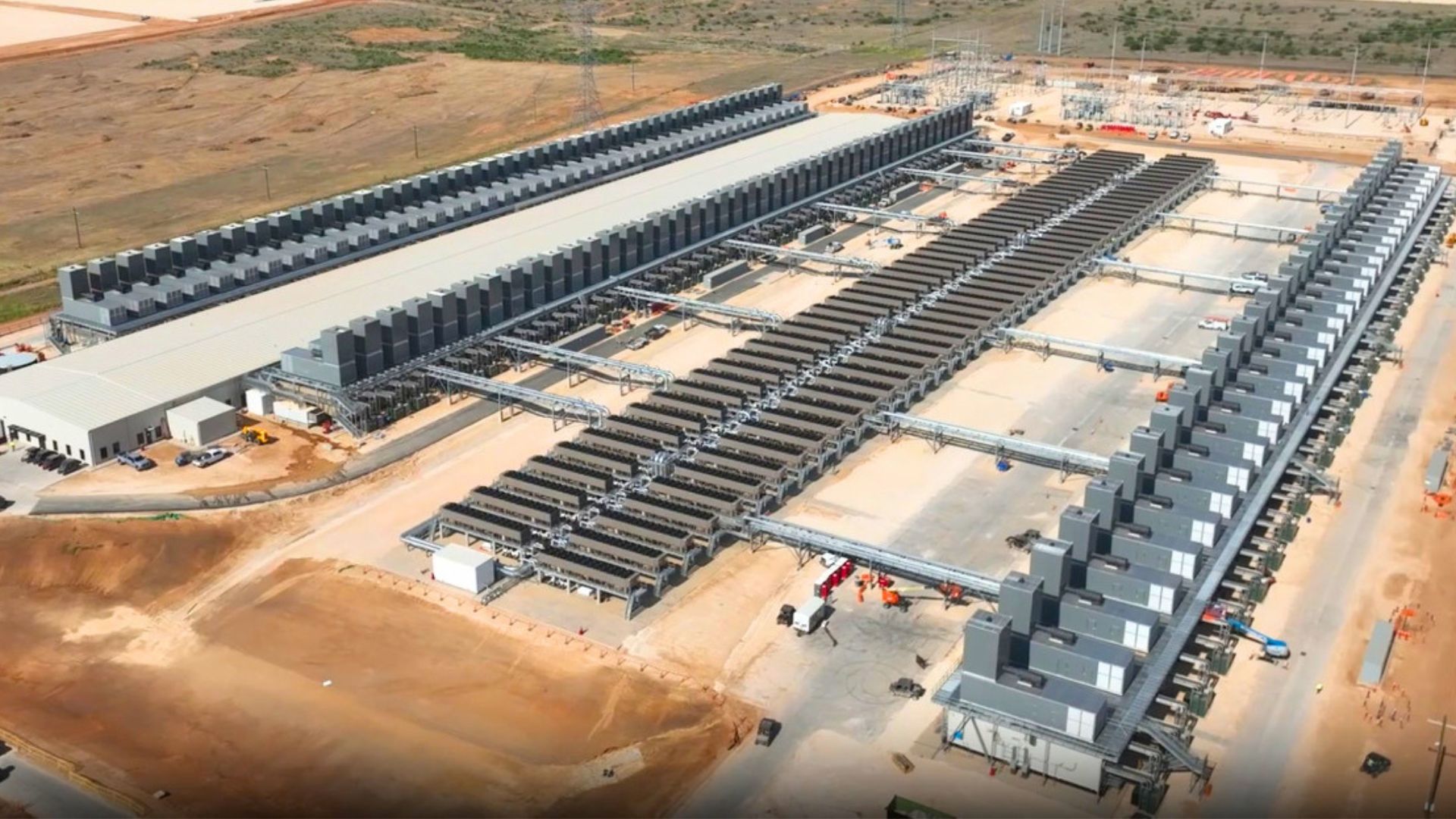
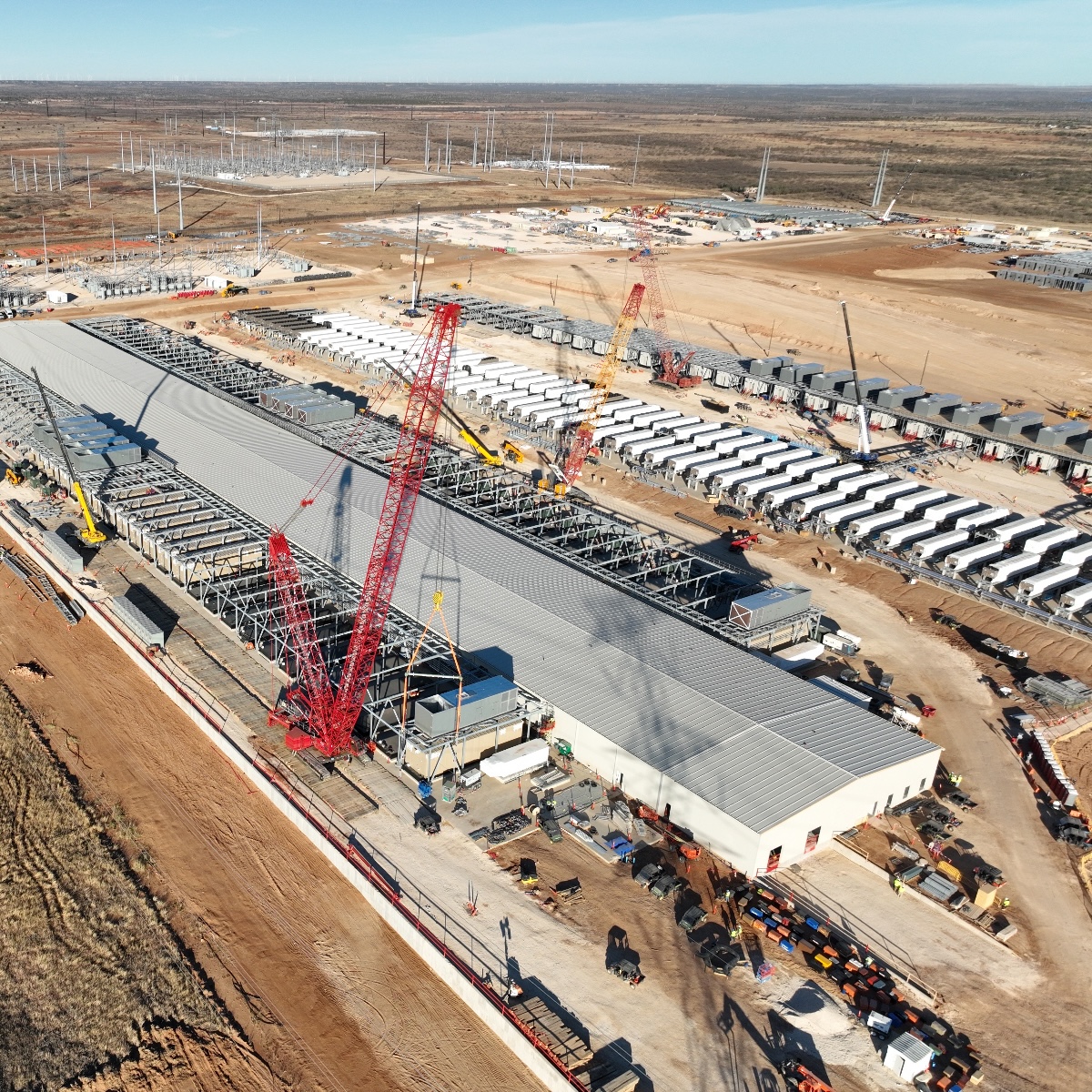
What stood in front of us was an enormous opportunity and an equally enormous challenge. Helios had started as a 180MW bitcoin mining facility. Galaxy Digital had a much bigger vision for its future: transform the existing infrastructure into a hyperscale AI and high-performance computing campus.
This was not a normal data center project. Not even close.
While others were quick to find reasons to avoid the challenge, Clayco stepped in. What started as an informal phone call from Galaxy looking for advice led to an extraordinary solution on an almost crazy critical-path schedule.
We had to figure out how to take infrastructure built for cryptocurrency mining and reinvent it for an entirely different generation of computing.
And we had to do it FAST.
Instead of tearing everything down and starting over, our team found a way to preserve the existing structural shell. At one point, that meant raising a 1,050-foot-long structure approximately 28 inches to create the clearances needed for the new mechanical and electrical systems.
Think about that for a second.
At the same time, we were engineering, procuring, and fabricating major components off-site. More than 120 electrical houses. Ninety-five prefabricated chiller skids. Dozens of modular pipe racks. Equipment was being manufactured and tested while civil, structural, and site work continued in Texas.
That strategy changed everything.
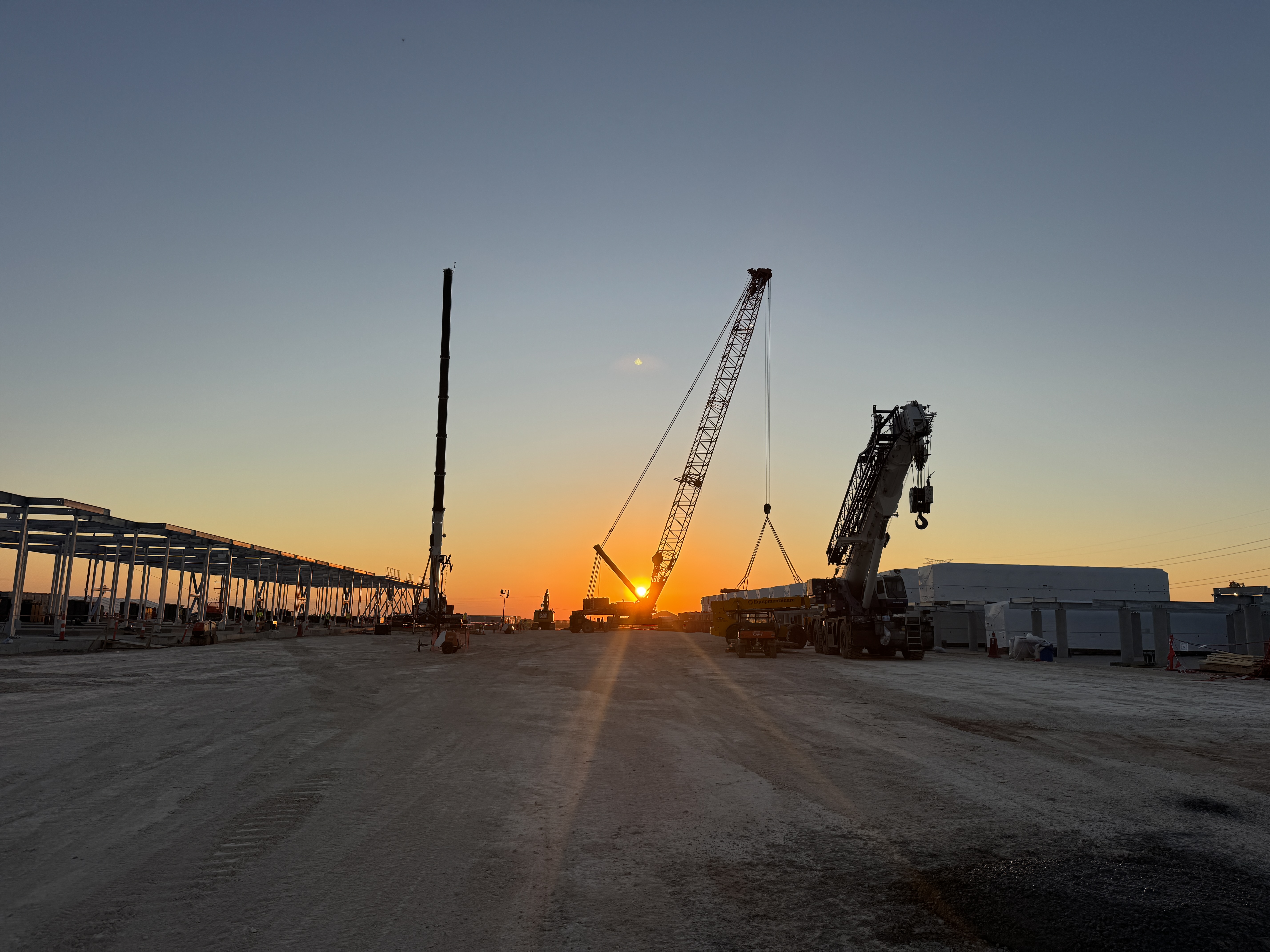
The location created another challenge. This is rural West Texas, and at peak we needed approximately 1,350 craft professionals working on the project. We created temporary workforce housing and RV accommodations and established an on-site concrete batch plant. On a project like this, logistics became as important as construction.
The first phase ultimately delivered 133MW of liquid-cooled critical IT capacity. Prefabrication accounted for approximately 952,000 labor hours, saved an estimated $24.5 million in labor, and accelerated the schedule by six months compared with a traditional field-built approach.
From demolition of the original cryptocurrency infrastructure through energization and commissioning, the work was completed in approximately 18 months.
That is the work of a remarkable team with a fantastic plan.
But one of the numbers I am most proud of has nothing to do with megawatts, schedules, or dollars.
The Helios team surpassed one million man-hours without a recordable incident. With more than a thousand people working every day at this scale and speed, that accomplishment says everything about the team, the leadership, and the culture.
.jpg)
Helios reinforced something important about where our industry is headed.
The future will not always be built from a clean sheet of paper. Sometimes the smartest solution is taking what already exists and having the imagination, engineering capability, and courage to completely reinvent it.
That is exactly what happened in Afton.
Galaxy had the vision. Our designers, engineers, builders, trade partners, suppliers, and craft professionals figured out how to make it real.
There are projects you finish and move on from.
Then there are projects you will talk about for the rest of your career.
Galaxy Helios is one of those projects for me.
Projects like this do not happen without great people. Period.
On the Galaxy side, Mike Novogratz and Austin Storms were a big part of making it happen, along with Matt Bruce of BE3 Design.
And we had an incredible Clayco team on the ground, including Adam Whitley, James Caraway, Pep Arballo, Patrick Parea, Raman Rajan, and Dave Burns.
Of course, there were hundreds of others who had a hand in this. Our designers, engineers, trade partners, suppliers, and especially the craft professionals who showed up every day and got it done.
It took a lot of people pulling in the same direction to make Helios happen.
What a team.

.svg)
Go beyond the post. Subscribe to the newsletter.
A monthly recap of ideas, progress, and what’s ahead.
.svg)
.svg)
.svg)
.svg)


.svg)
.jpg)
.jpg)


.avif)